Sun Rims
Sun will be introducing a new range of rims in the 1995 - 96 model year. These will include the M25, Rhyno, Venus and the CRT1611. These new models will be covered in our next pass of writing about rims in preparation for the edition 2 "treeware" version of the Buyer's Guide.
SUN M13L
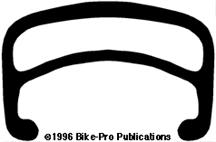
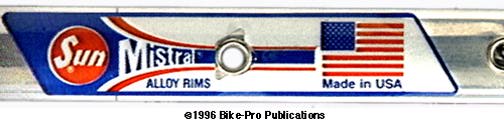
Made in the United States, the Sun M13L is a narrow 700c diameter rim that uses double wall construction with two-piece eyelets. The Box shaped extrusion has flat sidewalls, and is made of 6061 series aluminum with a T6 temper. The extrusion, if the rim is to be Silver, is Clear anodized, leaving it a matte Silver before it rolled into the rim hoop shape.
If the rim is be hard anodized dark Grey, it is rolled into the hoop first, then the ends are joined and the entire rim is anodized. The rim ends are joined using an aluminum insert that is wedged and bonded into the cavity between the cross-tie and the spoke bed walls, using a blue bonding agent and the rim ends as "sleeves" to grip the aluminum core holding the ends together. The joint quality on the specimen we picked at absolute random from our inventory, showed as perfect a joint as this style of fabrication is capable of, the sides were flush and smooth and the height of the joined ends matched to one another.
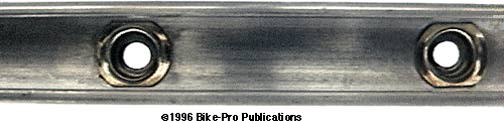
The M13L rim uses two-piece double wall eyelets to equalize the spoke nipple stress and help prevent spoke nipple pull through failure. The upper eyelet piece is stamped from brass clad or plated, sheet steel in a cup shape, while the lower eyelet piece is stamped from a nickel alloy and takes the form of a hollow rivet. The upper piece, having an oval flange, is inserted into the spoke hole from the interior, or tire side. The lower piece is set into the upper cup piece, with the lower piece protruding though the spoke bed wall. Pressure is applied to the top of the lower piece so a mandrel can flare the lower piece into a smooth round blossom that now holds both eyelet pieces firmly within the outer walls of the cross-tie and spoke bed walls. The spoke bed wall on the M13L showed no post machining distortion from this peening process.
We sell the Sun Metals M13L rim in a Silver or hard anodized Grey surface finish, with either 28, 32 or 36 spoke holes and a Presta valve drilling. More specifics about the M13L rim are available in the Rim Table.
M13L - 700c (Hole-28-32-36 / Color-GY-S) $ Price in Catalog

SUN M14A
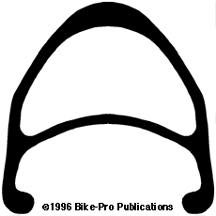
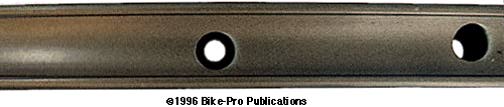
Made in the United States, the Sun Metal M14A has become the aero rim of choice for many road racing and mountain bike riders. The M14A uses double wall construction, in a Aero shape that has flat sidewalls and is made of 6061 series aluminum alloy with a T6 temper.
The rim ends are joined using an aluminum insert that is wedged and bonded into the cavity between the cross-tie and the spoke bed walls, using a blue bonding agent and the rim ends as "sleeves" to grip the aluminum core holding the ends together. The joint on several M14A rims we examined for writing and weighing were performed reasonably well, the ends butted well, the sidewall surfaces were very close to flush, and there was almost no raise in the section height of the ends at the joint. This Aero rim doesn't use eyelets to equalize nipple stress and help prevent nipple pull through failure. Instead the spoke bed wall where the nipple sits is made slightly thicker.
We sell the Sun Metal M14A rim in a Purple (lavender) or hard anodized Grey surface finish, with either 28, 32 or 36 spoke holes and a Presta valve drilling. More specifics about the M14A rim are available in the Rim Table.
26" (Hole-28-32-36 / Color-GY-L) $ Price in Catalog
700c (Hole-48-52-56 / GY) $ Price in Catalog
Metal Matrix 26"(Hole - 32-36) $ Price in Catalog
SUN CR20
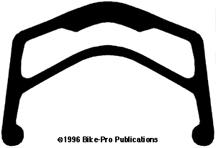
The Sun CR20 is a slightly wider rim that we sell only in the 26" diameter for mountain riders. It uses double wall construction, in the V-Box shape, with flat sloping sidewalls that become wider as they rise to the tire bead hook. The rim is made from 6061 series aluminum alloy with a T6 temper. The cross-tie wall descends in a "V" shape and is suspended between the sidewalls.
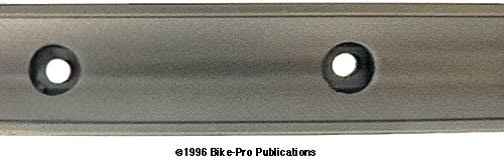
The CR20 doesn't use spoke eyelets to prevent spoke nipple pull through failure, instead the very bottom of the V shaped spoke bed wall, which already a bit thicker, has an added ridge of aluminum as a part of the spoke bed. The extrusion, if the rim is to be Silver, is Clear anodized, leaving it a matte Silver before it rolled into the rim hoop shape.
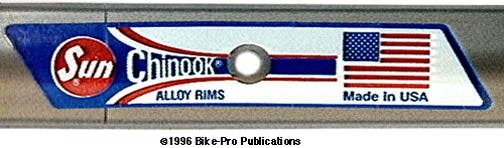
If the Rim is be hard anodized dark Grey, it is rolled into the hoop, the ends are joined and the entire rim is anodized. The rim ends are joined using an aluminum insert that is wedged and bonded into the cavity between the cross-tie and the spoke bed walls, using the rim ends as "sleeves" and a blue bonding agent to grip the aluminum core holding the ends together. The rim is then drilled or "pierced" and labeled.
We sell the Sun Metal CR20 rim in a Silver or hard anodized Grey surface finish, with either 28, 32 or 36 spoke holes and a Presta valve drilling. More specifics about the CR20 rim are available in the Rim Table.
26" (Hole-28-32-36 / Color-GY-S) $ Price in Catalog