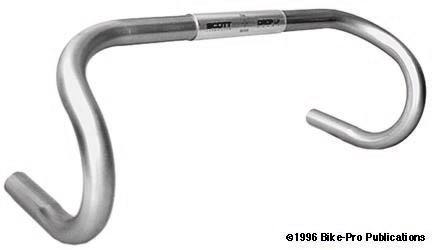
The Scott Drop LF is a traditional drop bar with a difference in the inner surface of the 6063-T832 aluminum alloy tubing used to make it. The tubing has a 23.8mm outer diameter, but has a varying wall thickness due to twelve slight rises inside the tube. These pyramid shaped rises, or ribs or "facets" as they are known, have a 1.5mm wide base, rise making a 1.48mm wall thickness at their height, and have a slightly rounded top. The ribs are spaced 3mm apart around the interior of the tube. The wall thickness of the 3mm gaps between the facets is 1.24mm, so the variation between the standard wall thickness and that of the rib is less than 1/4 of a millimeter. As you have read about the other Drop bars, you may now notice that the wall thickness at its highest is still thinner than that of other bars, this may contribute to this bars somewhat lighter weight. The ribs extend the length of the tubing. The Drop 2 LF uses a 118.5mm long sleeve to build its diameter from the 23.4mm to 26.0mm for the road stem standard, or they are also available with a 26.4mm O.D. sleeve for the Cinelli stem owners. In the off chance you have a Mountain stem that you want to use, it is available for a 25.4mm stem. The straight section of the top of the handlebars is 270mm long. Measured center to center, this bar has a 151mm drop and is anodized to a Blue Grey color. The Drop 2 LF is made in three widths, 40 cm, 42 cm, and 44 cm. The weight of the 42 cm version with a 26.4 diameter sleeve is just 272 grams. Made in USA.
Width-40-42-44 /L 26.0 center diameter $ Price in Catalog
Width-40-42-44/L 26.4 center diameter $ Price in Catalog
Width-40-42-44/L 25.4 center diameter $ Price in Catalog
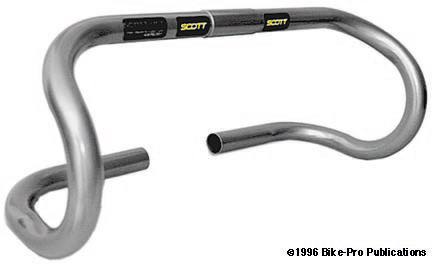
The Drop-In bar adds a lower placement for the hands styled as though you are riding "high" on the bars. This is accomplished by bending the bar backward again in toward the headtube after the lower flat section of the downward bend. The Drop-In bar is made of 6063-T832 aluminum straight gauge alloy tubing. The outer diameter of the tubing, unpainted is 23.8mm. The wall thickness, at the tubing end is 1.51mm. The length of the straight section of the handlebar top is 280mm before the forward bends begin. The nearly flat section at the bottom of the traditional drop is about 4" long. The area for grip purposes, once the lower handlebar bends back toward the head tube is about 5" (125mm) long. The drop measured center to center is 155mm. The Drop-In 2 bar has a "collar" rather than a sleeve to build diameter out to that needed by the stem. The "collar" is a piece of tubing, 60mm long, with a single cut made through it lengthwise. This split tube is put in place on the tubing blank before it is bent into the final handlebar. The Drop-In 2 is available to fit a 26.0mm inner binder diameter road stem, or a 25.4mm mountain stem. Available in 40cm, 42cm, or 44cm widths, the Drop-In is wet painted a metal flake Silver-Grey. The weight of a 42cm wide Drop-In with a 26.0mm center diameter is 360.5 grams. Made in USA.
Width-0-2-4 26.0 center diameter $ Price in Catalog
Width-0-2-4 25.4 center diameter $ Price in Catalog
Scott also makes an LF version of the Drop-In bar. As written about above the LF tubing is made of the same aluminum alloy, but has small ribs or facets running the length of the tube which already has a thinner tubing wall to reduce weight while trying not to compromise the tubing strength. All other aspects of the Drop-In 2 LF are the same as the Drop-In 2 except the tubing and it is anodized a Blue Grey color.
Width-40-42-44/LF 26.0 center diameter $ Price in Catalog
Width-40-42-44/LF 25.4 center diameter $ Price in Catalog